7°


 06 October 2018
The Melrakkasletta Peninsula
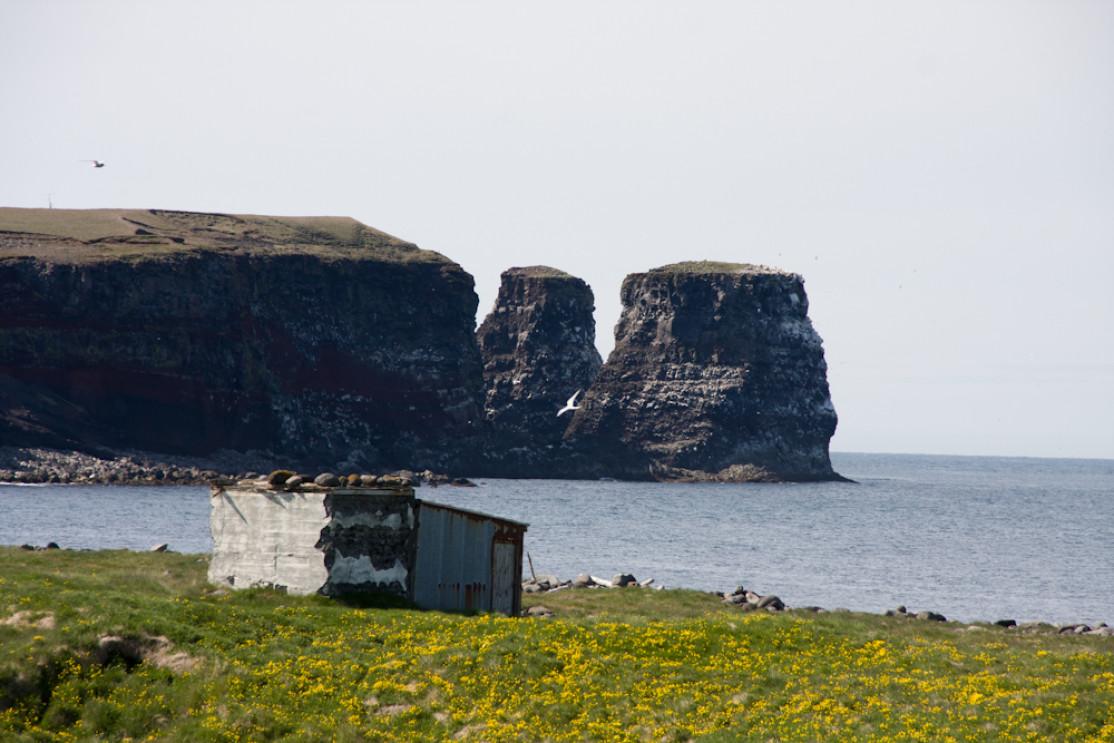
The Melrakkaslétta peninsula is a remote place in the far north-east of Iceland, often overlooked by tourists, who generally prefer taking the trusty Road number 1 from Myvatn to the Eastern Fjords.
Located north of Asbyrgi, you can get around the peninsula via Road 85 and via Road 870, the old dirt coastal road (about 55 km between Kópasker and Raufarhöfn), which is bumpier but very scenic and little travelled. Hraunhafnartangi is the northernmost tip of Iceland (excluding Grimsey, but that's an island) and its lighthouse is located less than 3 km from the Arctic Circle.
A small clarification: since 2016, measurements by the National Land Survey of Iceland place nearby Rifstangi about 68 metres further north than Hraunhafnartangi. Both capes can be visited on the same day and are often presented as the two northernmost points of the country.
The walk to Hraunhafnartangi lighthouse
From the parking area, an easy walk of 1.7 km each way (about half an hour one way) follows a 4WD track along a driftwood-covered shore rich in birdlife, to the 19 m tall square lighthouse. Near the lighthouse is Þorgeirsdys, a large pile of stones said to be the burial mound of the Viking warrior Þorgeir Hávarsson, whose death is told in the Saga of the Sworn Brothers (Fóstbræðra saga). Tradition says to add a stone as you pass.
If you take a photo of yourself in front of the lighthouse, you can ask certain local service providers in Raufarhöfn for a certificate confirming you reached the northernmost point of mainland Iceland. Note that access is restricted during the eider nesting season (see below).
Melrakkasletta: Wildlife and the Midnight Sun

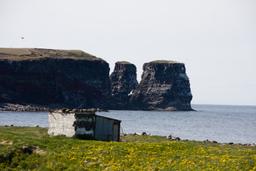
This region is ideal to watch the midnight sun from mid-June to mid-July thanks to its latitude and the magnificent cliffs that border its coasts. Skipavik, Rifstangi, Hraunhafnartangi, Rakkanes... these fantastical names make for so many perfect viewpoints to observe this unique solar phenomenon.
Please note: the eider duck is protected under Icelandic law, and access to its nesting areas and their surroundings is prohibited from 15 April to 14 July. This overlaps the midnight sun season: at the capes of Hraunhafnartangi and Rifstangi, respect any signs and restrictions in place, or plan your visit after 14 July.
Another very good spot to admire the midnight sun after a stroll by the sea is undoubtedly Rauðinúpur. Take Road 85 until you reach the intersection located a few kilometers north of Sandvik, and look for the sign indicating Nupskatla. After 8 km of dirt road, you will reach the Rauðinúpur farm.
Once parked you can enjoy a very pleasant hiking trail along the coast (allow 30 to 45 minutes, around 45 minutes each way) to reach the promontory with a line of sight on the local birdlife, hundreds of gannets and fulmars.
The black and red bedrock of the promontory testifies to its volcanic origin. Detailed information available here:
It is one of the few places in Iceland that is home to the gannet species, and in good weather with the sounds of birds perched on the promontory and the midnight sun in the background, it truly is magical.
This is the perfect place to meet an Arctic fox, though they can be shy and fleeting, but the numerous Arctic terns on the way are much more vocal about their place in the world.
The path along the coast is rocky and treacherous with pebbles, so there is another option to get around this. Stay on Road 85 to the Langanes peninsula and its famous Stóri Karl, where numerous gannets are known to perch.
Raufarhöfn: the only stop with services
The village of Raufarhöfn, on the east coast of the peninsula, is about 10 km from Hraunhafnartangi and is the most practical base for exploring the area. It has a grocery store, a self-service fuel station, a car repair shop, a pharmacy, a bank, a swimming pool, a campsite, a hotel, a guesthouse and a café, so fill up on fuel and supplies before heading deeper into the peninsula.
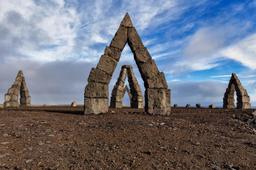
On a hill above the village stands the Arctic Henge, a large stone monument inspired by Norse mythology, especially photogenic under the midnight sun.