4°


 02 January 2018
The Icelandic Horse
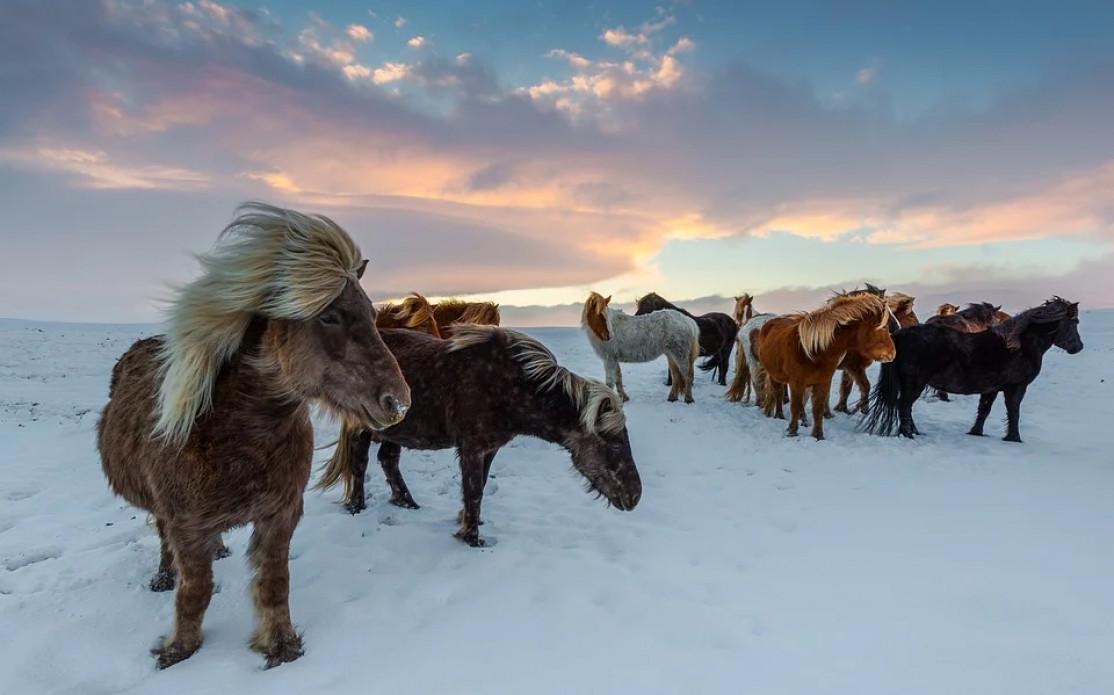
For over a thousand years these small horses (1m15 to 1m35 at the withers) have been the faithful steeds of Icelanders, a breed that can handle the difficult climate of northern countries. Whatever the season, the Icelandic horse is a common sight when visiting Iceland.
There are around 80,000 horses in Iceland compared to 100,000 in Europe. They are invaluable companions here for a variety of activities like sheep herding, known for their gentle and loyal temperament and impressive physical endurance. Icelanders are particularly proud of their unique horses.
Meeting horses by the roadside
Most horses live on private land. If you spot some from the car, park only in a safe spot with good visibility, and don't stop abruptly or on icy roads or low-visibility stretches. Don't enter private property without the owner's permission, don't feed the horses (extra food can harm their health and disrupt their training) and avoid petting them, as they may bite or kick. The easiest way to get close to them is to book a riding tour.
- The Icelandic horse's unique characteristics
- Horseback riding in Iceland
- Travelling with your riding gear
The Icelandic horse's unique characteristics

There are very strict breeding laws in force to prevent any mixing of races, in order to keep as close as possible to the original breed introduced to the island by the Vikings. For example, once a horse has left the island, it's almost impossible for it to get back in!
One of its main characteristics is its unique gait, of which it has 4 rather than the usual 3: the walk, the trot, the canter/gallop, and the “tölt”. Tölt (pronounced Teult) is a very smooth 4-beat lateral gait that is comfortable at all speeds. The particularity of this pace is that the horse always has at least one foot on the ground. Some breeds even have a 5th gait, the flying pace, which is a sight to behold.
Because there is almost no bounce, the tölt makes for a very comfortable ride, even for beginners. The 5th gait, the skeið ("flying pace"), is a fast two-beat pace used mainly in competition, where all four feet leave the ground at some point and the best horses approach 30 mph (48 km/h). Not every horse masters it, and it isn't used on tourist rides.
Horseback riding in Iceland

Inevitably, with Iceland's exceptional vistas and rich history of horseback-riding, there is a great offer for visiting riders. Many guesthouses and other farms offer this type of activity, and you'll generally see it indicated in the rental details.
Prices are variable and depend on the duration (often starting at around €90 for 1 hour and up to €100-€125 for 1 to 2 hours of horseback riding). The riding tours start at 1 hour and can go up to a half day excursion. These are absolutely breathtaking landscapes, and some tours stay out late in the day to catch the midnight sun...
Before you book: experience, weight and gear
- Experience: no prior riding experience is needed for most 1 to 2 hour tours. The guide usually spends 10 to 20 minutes on basic instruction before heading out and matches each rider with a horse suited to their level, so be honest about your experience. Longer and highland rides generally require some riding background.
- Weight: most operators set a maximum rider weight, often around 100 to 110 kg (220 to 240 lb) depending on the company. Check the limit with your operator before booking.
- Gear: helmets are usually provided, sometimes rain gear too. Bring warm layers, a waterproof and windproof jacket, gloves and sturdy closed-toe shoes, ideally with a small heel. Leave scarves at the hotel, as they can catch in the reins.
Some tour companies offer riding treks lasting 3 to 10 days which is a great way to explore a region at an easy pace but still cover a lot of ground. In winter, you can even book tours to hunt for the Northern Lights on horseback!
When to go horse riding
Tours run year-round. Summer (June to August) brings the mildest weather, very long days (up to 21 hours of daylight) and green landscapes. Winter days are short, but some rides can offer Northern Lights views on clear evenings. In autumn, horses are still used to gather sheep from the highlands during the réttir roundup, which runs from early September into October.

The 10-day Sprengisendur crossing on horseback is one of the most popular attractions for experienced riders. Crossing this great desert by 4x4 (the F26 is a mountain track reserved for 4x4 vehicles, closed in winter and generally open from early July) is already truly unforgettable, but on horseback these wildly contrasting landscapes truly come alive. It's said to be the best way to appreciate this wildland, an authentic connection with nature, and we can only agree.
The hike starts in the green valleys up north before descending into the rocky Sprengisandur desert with uninterrupted views of the surrounding glaciers, and fords to cross as your mount kicks up a spray of water! Truly unforgettable.
Another favorite riding excursion is the 10-day trek on horseback under the midnight sun. These are held in the Far North East, very close to the Melrakkaslétta peninsula, or in the heart of the Landmannalaugar region, known around the world for its extraordinary panoramas…
Most horseback riding tours are just hiking trails you do a bit faster than usual, so you can find these tours all around the island. Here are a few suggestions:
- Horseback riding near Reykjavik in the lava fields (2 hours)
- Horseback riding on the black sand beach of Víkurfjara, near Reynisfjara (1H)
- Horseback riding in Fluðir (1H)
- Horseback riding in Hveragerði (1H)
- Horseback riding to Reykadalur Hot Springs (7 to 9H, May to September)
Travelling with your riding gear
To protect horses that have almost no immunity to foreign diseases, Iceland bans bringing used riding gear into the country: saddles, bridles, rugs, whips and gloves. Riding clothes and boots are allowed if they have been machine washed or dry cleaned beforehand. Other outdoor equipment from abroad, such as hiking boots, should also be cleaned and disinfected before any contact with horses or farmland.