1°


 04 January 2019
The Glymur Waterfall
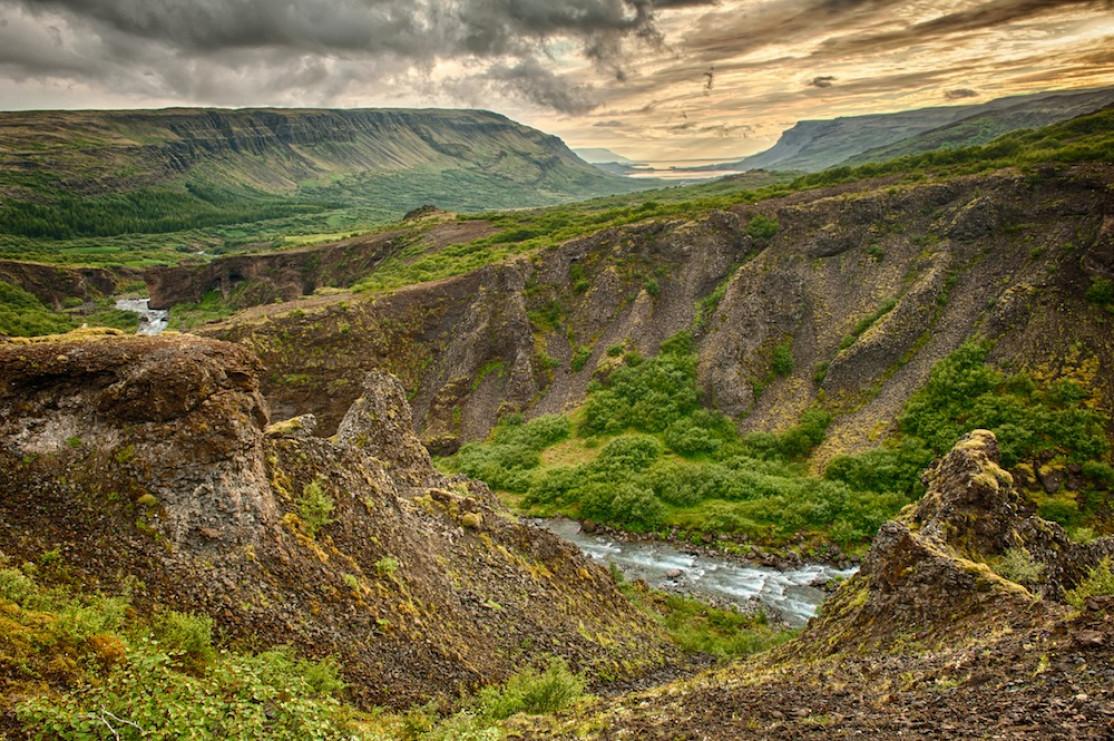
Towering at 198 meters, Glymur was as far as anyone knew the highest waterfall in the country. This was true until 2007 when a new waterfall was discovered in Vatnajökull National Park, the mighty Morsárfoss standing at 227 meters high.
Paradoxically, this waterfall is a bit of a hidden treasure, often forgotten by tourists because it's a bit harder to get to than other waterfalls in the south.
How to get to the waterfall
Located in the heart of the Hvalfjörður fjord, Glymur is the closest waterfall to Reykjavik, located only about 65 km from the capital or a 1H drive.
To get there, head towards Mosfellsbaer north of the capital before turning off onto the beautiful Road 47 that runs along the fjord.
You'll need to walk 1 hour to reach the waterfall, which is hidden in a canyon. This trail to Glymur is a great idea for visitors looking for a short hike near Reykjavík.
Visitors generally leave their vehicles in Botnsa, the car park is large enough to accommodate many vehicles and a starting point for various hikes.
From Road 47, a gravel track of about 3 km leads to the car park, marked "Botnsa" on Google Maps. Parking is free, but there are no toilets or other facilities, so bring water and food with you. This is a very popular hike in summer and the car park fills up quickly, so arrive early in the morning if you can.
A magnificent hiking trail

Glymur: dadiolafs @fotolia
Several hikes are possible starting from the car park, including the “Leggjabrjótur” trail.
There are two main hiking trails leading to the waterfall, one from the west and the other from the east.
The hike to Glymur is beautiful, but the going is tough. It is strongly recommended you equip yourself with good walking shoes, because some passages are a bit steep and can get slippery in the rain. It takes about 3 hours to complete the 7 kilometers of this trail.
The best time to do this hike is from June to September, when the trail is clear and the log across the Botnsá River is in place. Outside these months the log is removed and the crossing becomes more difficult; snow, ice or high water can make the hike dangerous. Check the weather (vedur.is) and road conditions (road.is) before you set off, and turn back if conditions are poor.
The path will take you up a hill, along a cliff edge, and then through a cave... At this point, there are 2 ways to reach the waterfall:
- The north side
- The south side
We recommend the southern path because the view of the waterfall is much better, and once at the top, you can actually go back down on the other side in any case.
From the south side, after a 30-minute walk from the car park through the superb lupin fields you'll go down through a small cave to a waterway, the Botnsá River. This is where the trail stops being family-friendly. The bridge across is no more than a wooden log and a rope. Hikers have to go one by one to reach the other side. Be aware that this log is only in place in summer (generally from June to September); outside that period, do not attempt to wade across the Botnsá, as the loop is not possible without the log. Check the current conditions before you set off. Some families have at this point had to turn back as it turned out to be too difficult for a young child in their party without risking losing balance and slipping into the water.
The path continues along the riverbank, along the pebble shore, to arrive at a small and fairly easy climb that leads to the first viewpoint.
Safety tips
- In several places the trail runs very close to the cliff edge, so the hike can be challenging if you are afraid of heights.
- Stay on the path marked by cairns; the return along the west bank is less clearly marked and it is easy to take the wrong trail.
- There are no cafés or toilets along the route: bring water, food, a windproof jacket and warm layers, as the weather changes quickly in the fjord.
- Mist from the waterfall can soak camera gear, so keep it in a dry bag.

So you'll have to cover 3 kilometers to even see a drop of this impressive waterfall, which is nearly 200 meters tall. It's quite an experience, the landscape around it almost as impressive as the waterfall itself. The Glymur's waters plunge 200 meters down into a narrow canyon with the most deafening roar.
Continue uphill for another quarter of an hour to reach the second viewpoint. This is the fork in the road mentioned earlier. You can go back down the way you came or cross the river (shallow in normal conditions, but best avoided after heavy rain or when the water is high) to take the north trail to get back to your car. This return trip in the middle of the birch forest with a view over the whole fjord is the perfect way to finish the hike.
A note on the second river crossing: there is no bridge or log here, and the water is icy, so expect to get your feet wet. A pair of light sandals or water shoes lets you keep your hiking boots dry, and walking poles help with balance on the slippery stones.
The Glymur hike: Fyle@Fotolia.com
Nearby
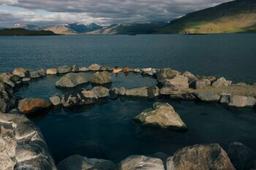
To unwind after the hike, you can stop at the Hvammsvík hot springs, on the shore of Hvalfjörður. If you are continuing north, the Snæfellsnes Peninsula is within reach by car and combines well with Glymur on a road trip.