-6°


 01 February 2019
Hveragerði Geothermal Area

Hveragerði, literally “the Hot Gardens”, is Iceland's most well-known commune for geothermal energy, located less than 45 km from Reykjavík, a 30-minute drive via Road number 1.
This pretty little town with its 2,500 inhabitants is located along Road 1 on the South Coast, so if you are in the region don't miss your chance to visit Hveragerði.
Hveragerdi: Hot springs and greenhouses

Hveragerdi has some great features: a campsite, an outdoor 50 m swimming pool (Laugaskarð), and a shopping center, but the real attraction is of course the hot springs. Located on a particularly active geothermal zone, this whole area is fed by the Hengill volcano located north-west of the town. On the other side of Hengill, the Nesjavellir hike lets you see more steaming vents and mud pots.
In 2008 an earthquake struck the region and left a fairly large fault above the city and a boiling pot (Leirgerður) near the school.
Hveragerði has embraced this geothermal vibe on every level. Restaurants feature outdoor kitchen stoves heated by geothermal energy (photo). You can spot Hveragerði from afar from the columns of steam coming from the city's numerous hot springs. And of course these springs feed into the local swimming pool for the Icelanders to be able to enjoy a nice swim in thermal waters.
Laugaskarð swimming pool
The Laugaskarð pool, opened in 1938, is considered one of the most beautiful in the country. Its outdoor pool is 50 m long and 12 m wide and is heated by natural geothermal steam. There is also a heated shallow pool, a cold tub, a hydro-massage hot tub and a natural steam bath. As in all Icelandic pools, you must shower without a swimsuit before getting in the water.
- May 15 to September 14: Monday to Friday 6:45 am to 9:30 pm, weekends 9 am to 7 pm.
- September 15 to May 14: Monday to Friday 6:45 am to 8:30 pm, weekends 10 am to 5:30 pm.
- Fee: about 1,500 ISK for an adult and 440 ISK for a child in 2026, according to Far Travel.
These hot springs also provide water to the city's 50,000 m² of greenhouses, but also residences, pools, and all the local infrastructure including hospitals! Hveragerði is a local capital of agriculture, growing fruits and vegetables in greenhouses all year round, which allows for critical food stocks in the region. In winter, the town shines like a beacon with all the artificial lighting in the many greenhouses.
In Hveragerði they grow a huge variety of crops from traditional vegetables like salads and cucumbers, to the more surprising fruits and vegetables like tomatoes and even... bananas! Icelandic bananas are a thing. Greenhouses organise tours for visitors, and there is a short walking trail between the greenhouses where you can cook an egg over a hot spring (see video below), and enjoy black bread baked right in the hot soil at your feet.
Local hiking trails
This map indicates the different trails in and around the city to discover all the secrets of the hot springs: Map of Hveragerði.
Don't miss the 3-kilometer “health trek” or “hot spring trail” which is a sort of grand tour, passing each geothermal site, the small Reykafoss waterfall, and the various greenhouses.
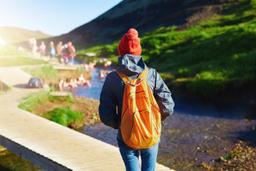
You can also swim in a natural hot spring very close by in the Reykjadalur Valley. Additional information about the Reykjadalur valley and the hot water river.
This hike is well known in the region, but even beyond, it is famous across Iceland. Count about an hour's walk (3.5 km) from Hveragerði, a little more with breaks. Access to the Reykjadalsá River is easy, just follow the map: Map of Reykjadalsá
At the entrance to the valley, a new built bathing complex, Reykjaböð, offers a natural hot spring lagoon, a sauna, a cold plunge and a bar. Prices start from 8,900 ISK for the Classic admission and from 16,900 ISK for the Signature admission, which also includes the Nordic bathhouse areas. Don't confuse it with the natural hot river, which is free to reach on foot but has no showers or changing cabins. Opening hours and booking are on reykjabod.is. For the hike, parking and what to bring, see our Reykjadalur guide.
What else to do in Hveragerði
- The 2008 earthquake exhibition: at the Sunnumörk shopping centre, it documents the magnitude 6.3 earthquake of May 29, 2008 with photos, footage and geological data. The information centre also has an earthquake simulator.
- Listasafn Árnesinga art museum: founded in 1963, it is the regional art museum for South Iceland, with temporary exhibitions all year.
- The Mega Zipline: a one-kilometre zipline over the Black Canyon, with a seated ride and a "Superman" ride; riders must be at least 9 years old and weigh between 30 and 120 kg. Book ahead in summer.
- The Geothermal Exhibition at Hellisheiði: inside the geothermal power plant, just off Route 1 about 25 km east of Reykjavík, a self-guided audio tour takes 45 to 60 minutes. Handy on the way there or back.
- Blómstrandi dagar: the annual "Blooming Days" festival takes over the town in August, with live music, markets and art shows.