6°


 04 April 2015
Golden Circle in March

We set the alarm to 8AM that morning, and thankfully the weather was at least as nice as the day before, with 6°, and the wind seemed less present, giving the impression of a much better temperature. Today we were doing the Golden Circle (Gullfoss, Geysir, Thingvellir), hoping to arrive in Reykjavík at the end of the afternoon to enjoy our last evening.
On the way to the Golden Circle
We were going to reach the Golden Circle by route 30 via Flúðir; it was probably the shortest, and we had never done this route. We stopped several times along the road to admire the numerous Icelandic horses that wandered along the road. The road was nice and not too monotonous.
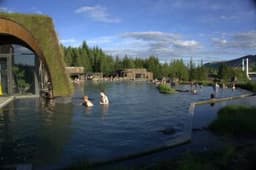
Flúðir is also home to the Secret Lagoon, the oldest swimming pool in Iceland, whose water stays at 38-40°C all year round: a great place to warm up in winter. According to the official website (October 2026), it is open daily from 10 am to 7 pm from 1 October to 31 May (until 6 pm on 24 and 31 December). Booking ahead is recommended as a spot is not guaranteed without a reservation, and adult entry is 4,500 ISK.
The Golden Circle in winter


We arrived quietly around 11 am in Gullfoss, which did not look at all the same as in summer and was surrounded by a lot of snow. It was really superb, the noise it gave off, and the flow were quite impressive. We even decided to eat in the area at noon after having photographed it from all angles. On the menu: a skinka (ham) sandwich with Icelandic cheese, Skyr for dessert and Viking to go with it all. Not necessarily balanced but very tasty...
Good to know if you visit at this time of year: in winter, the spray from the falls freezes on the railings and steps. The path down closest to the waterfall is often icy and can be closed, while the upper viewpoint usually stays accessible. Traction spikes that slip over your shoes make a real difference. More details in our guide to Gullfoss waterfall.
It was the first time we got to see Geysir with almost no one around.
We arrived around 12:30 pm, 2 or 3 couples were walking on the geothermal site, but no more, ideal for taking photos, especially since there were almost no clouds in the sky. The first few times we stayed near the Great Geyser without necessarily taking the time to walk around the area. This time we went for a long walk in the middle of the cracking ground and the smoke present everywhere on the site, very nice.
For reference, the geyser that erupts regularly is Strokkur, about every 5 to 10 minutes, though the interval varies: plan to watch several eruptions rather than relying on a timer. Even in the middle of winter, stay on the marked paths and behind the ropes, as the ground can be just a thin crust over boiling water. More details in our guide to Geysir.
It was at the very beginning of the afternoon that we took road 37 then 365 to the Thingvellir National Park. We had already done this route; it had even more charm in winter, I think, with the snowy mountains in the distance. Again, upon arriving in front of the Thingvellir church, the river was completely frozen over and sparkling.
We planned to walk in the park for a long time, from the church to the Almannagjá fault to the Öxarárfoss waterfall that we had never seen. It was really beautiful, surrounded by snow and frozen in places. We stayed nearly 2 hours in the park before heading back to the capital where we planned to spend our last evening.
A note on parking: three car parks are paid at Thingvellir. P1 (Hakið) is at the upper end of Almannagjá next to the visitor centre, P2 (Efri-Vellir) is below Öxarárfoss, and P5 (Valhöll) is the closest to the church and the Silfra fissure. The fee on the official website in October 2026 is 1,000 ISK per day for a car with five seats or fewer (1,200 ISK for six to nine seats), and a single payment is valid on all three car parks on the same day. You pay at the machines (visitor centre, P2, P5) or online at checkit.is, as number plates are read by camera. More details in our guide to Thingvellir National Park.
We were sad to arrive in Reykjavík as always, the return to civilization. The evening in Reykjavík means it's the last day in Iceland. We took advantage of the evening to take a walk on Laugavegur, near Lake Tjornin and the old port. We would be eating at the old port tonight: on the menu, local specialties, mutton for madam and Greenland halibut for me. The sun that had not left us was setting and plunging the capital into the darkness of winter, it was the end of our weekend, tomorrow the plane would leave Keflavik at 6AM.
Review and my opinion on Iceland in winter

I think we were already very lucky to have such weather for the month of March, it was absolutely unexpected. We especially loved this winter trip to Iceland. I think that the month of March is a good choice because you get to see the winter side, the days are still long, there aren't too many tourists, and prices are more affordable.
Obviously, the month of June and its long days, its contrasts, its wildlife is for me the ideal month to really experience the natural wonder of Iceland, but I really liked winter and I will definitely do it again. The country seemed even wilder at this time even if we had chosen particularly touristy places for these 3 days, winter allows us to see them from a different angle.
Finally, the only constraint is time, because if the weather is bad during your winter stay, quite a few museums and other sites are closed and it can be difficult for you to reorganize your day. If you choose a month like January or February, another constraint will be the length of the days because you will only have a few hours of light, which does not allow you to visit many things.
As for the condition of the roads, winter is usually tricky so we chose sites that are easy to access, and the south as it's the mildest region.
If you drive the Golden Circle in winter, the roads are maintained all year but driving requires care, and a storm can close road 35 on some days. Check road conditions on road.is, alerts on safetravel.is and the forecast on vedur.is on the morning itself. Also keep daylight in mind: in December and January the sun stays above the horizon for only about 4 hours, so it is best to set off early to see the three sites in daylight.
Next time, if we come back in winter as we hope, I think we'll do the Snaefellsnes and Husafell peninsula.
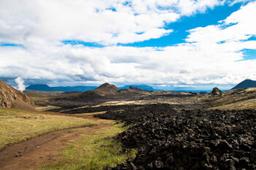
The best part of the trip is hard to pin down but for me it was probably the arrival in Kleifarvatn and the breathtaking scenery, alone in the middle of nowhere.